Archive for the 'Design' Category

Aug 18 2011

Nice Package: 5 Tips for a Great Package Design


As “the hot dog wars” battle on between Sara Lee Corporation and Kraft Food Inc. in a Chicago courtroom over misleading package designs, I think it’s time to take a deeper look into packaging and why it is important enough for these two companies to battle it out in court.

While a brand must employ a successful strategy throughout many different touch points including advertising, identity, and web presence, it is packaging that could most directly have an impact on a brand’s sale. No longer is a product’s package merely a means of protection during transport from point A to point B, but an increasingly important factor in product’s success. A well-marked package will get a customer to pick up a product and take a closer look, which ultimately puts you one step closer to making that sale. This is why it is so important to have an interesting and compelling package design.

Kristin Everidge, Manager of Visual Branding at Addison Whitney, says “People are drawn to products with interesting packages because it suggests that what’s inside is equally appealing or different.” Package design can enhance a brand through unique structures, sustainable materials, cross promoting other products and building brand awareness through shelf displays and planograms that wow consumers during their weekly shopping trips.

Packaging is a vehicle that reflects the product’s brand and image. To ignore the importance of packaging in today’s market is your own product’s death. Package design should be a continuous investment to evolve with the ever changing world that is packaging.

But what makes a great design? I asked Kristin and these are her top five elements of a great package design (in no particular order):

    1. Shelf Presence/ability to grab attention quickly
    2. Effective informational hierarchy
    3. Inspiring materials and structure
    4. Functionality
    5. Clean & crisp design (images, typography, and functional information)

So do you think you’re immune to the power of package design? I think the real answer would surprise you, next time you’re shopping the aisles of your local Target, take note of the products you grab and how compelling their designs are compared to the products you left behind…

One response so far

Jul 13 2011

Cracking the Code on Package Design

Published by Sara Abadi under Consumer,Design


From color scheme to font, companies place great importance on compelling package design for their brands. Now, one of the most overlooked parts of a package—the barcode—is getting an artful makeover.

Consumers are influenced by the entire experience of a product. That experience begins with packaging. A package is more than just a container. It is an asset that can motivate a purchase, making the outside just as important as what’s inside.

“Little clever barcodes seem to be all the rage across a variety of products in the consumer packaging world,” said Nick Irwin, Senior Graphic Designer at Addison Whitney. “Although, I do see it as a superfluous and trendy, it’s good to see these quaint design elements because each barcode is individualistic and can really fortify a brand message if done right.”

Form meets function as traditional black and white lines and numbers are taking the shape of famous buildings, blades of wheat and bubbles. According to the Wall Street Journal, the trend is popular with smaller companies, but one of the world’s largest food companies, Nestle SA, is even trying out vanity barcodes on some of its brands. For example, Nestle’s Juicy Juice Sparkling Fruit Juice Beverage has bubbles rising up from its barcodes, and its Skinny Cow low-calorie dessert line features barcodes shaped like a cow’s spot. Consumer-goods companies hope these vanity barcodes will better connect with customers and help their product stand out in a crowded marketplace.

No responses yet

Jun 20 2011

Fast-Food, Version 2.0


Places like McDonald’s and Burger King are generally considered classic fast-food giants. The die-hard Big Mac or Whopper fans will always keep them in business, but a new slew of pseudo-fast-food restaurants are giving them a run for their money – even forcing them to reconsider their branding strategies.

These days, Panera Bread has free wi-fi. Noodles and Co. has healthy pasta dishes for around $5. Even Starbucks sells prepackaged deli sandwiches alongside its specialty drinks. But food isn’t the only allure of these new fast-food restaurants: their interiors are decorated with fresh, modern art, their staffs are comprised of enthusiastic young adults, and their customers often treat the establishments more as relaxing hang-out spots than eateries.

These brands accomplish what places like McDonald’s and Burger King fall short of —associating themselves with a growing class of individuals that will pay a little more for an atmospheric, modern meal. They are able to exude sophistication that is affordable, healthy, wholesome, and accessible — and who doesn’t want to be a part of that?

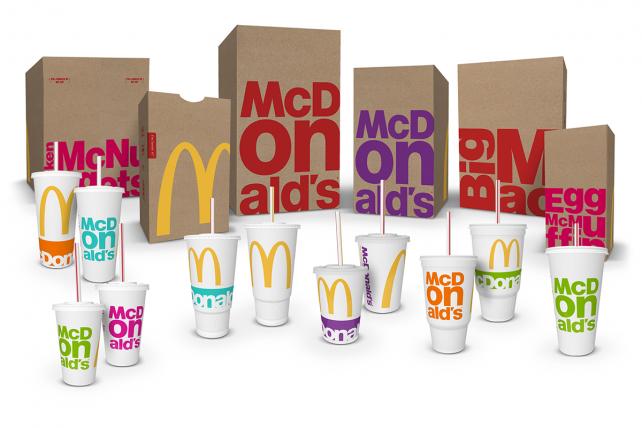
Lately, the previous kings of fast-food are taking a hint from their newer competition’s branding techniques and moving away from the catch-all, fast-food brand of cheap and greasy. McDonald’s, for instance, has recently been implementing new restaurant designs with relaxing color palettes and flowing fonts, along with menu items like fruit smoothies and oatmeal. Burger King is said to be revamping its entire restaurant feel, getting rid of the king mascot as well as adding a new Asian chicken salad to their menu.

But ditching the burger brand that the two chains almost single-handedly created could be hard to do, and regular customers might not embrace the changes. These restaurants take a risky gamble on a new trend that might not outlive their own established brands.

Will McDonald’s or Burger King reach the new standard of fast-food prestige? Share your thoughts!

Contributed by Allison Meeks

No responses yet

Jun 15 2011

Polaroid gone Gaga!

Looks like Polaroid has been re-branded by none other than Lady Gaga. The pop-culture icon has a new vision for Polaroid—literally. Since January 2010, the Fame Monster has taken on the role as creative director for Polaroid, designing and branding their latest round of camera products. There is still Polaroid brand equity for Gaga to reclaim and reinvent as the “camera” evolves.

The new line, Polaroid Grey Label, will maintain the brand’s core values of simplicity, authenticity, and sharing, while targeting a new generation with the futuristic style of Lady Gaga. The Grey Label is coined from “greige goods” a fashion term for fabric in its purest form. The name expresses the simplicity of Polaroid and the style of Gaga.

The most intriguing product presented is the Polaroid GL20 Camera Sunglasses. The product was inspired by the idea to fuse the icon of instant photography, with the queen of fashionable eyewear. These glasses not only allow eye protection from the sun, but also have a built-in camera that takes pictures and video. The camera fits on the bridge of the nose and the display screens are just below eye level, not to interfere with one’s line of vision. Not only can you take pictures with these glasses, you can also play them back to the world as you live it.


Another Grey Label item is the Polaroid GL10 Instant Digital Camera. Don’t be deceived by the boxy, old-fashioned look. This camera prints digital images right into your hands! It comes with a modern LCD screen display, and brings back instant image printing, defining the Polaroid picture of the new age.


The final product is called the GL10 Instant Mobile Printer. It’s a mini machine for printing photos instantly from your phone or camera anywhere– at a party, in the office, in the car—and it’s small enough to put in a purse. It acts as a functional tool as well as a fashion accessory. According to Lady Gaga, “This product will revolutionize how we see photos. Your images will no longer die a death on your cell phone or digital camera.”

The Instant Mobile Printer, Instant Digital Camera and the Camera Glasses are a unique “look” at how to turn images into a fashion statement. The products are coming out this summer 2011, and there’s no question they will require a large chunk of change. However the price of a Polaroid in it’s heyday of the 90s did not detract from the allure of the brand. Hopefully the Grey Label will provide the same appeal.

Contributed by: Emily Hassell

No responses yet

Next »


Alltop, all the top stories